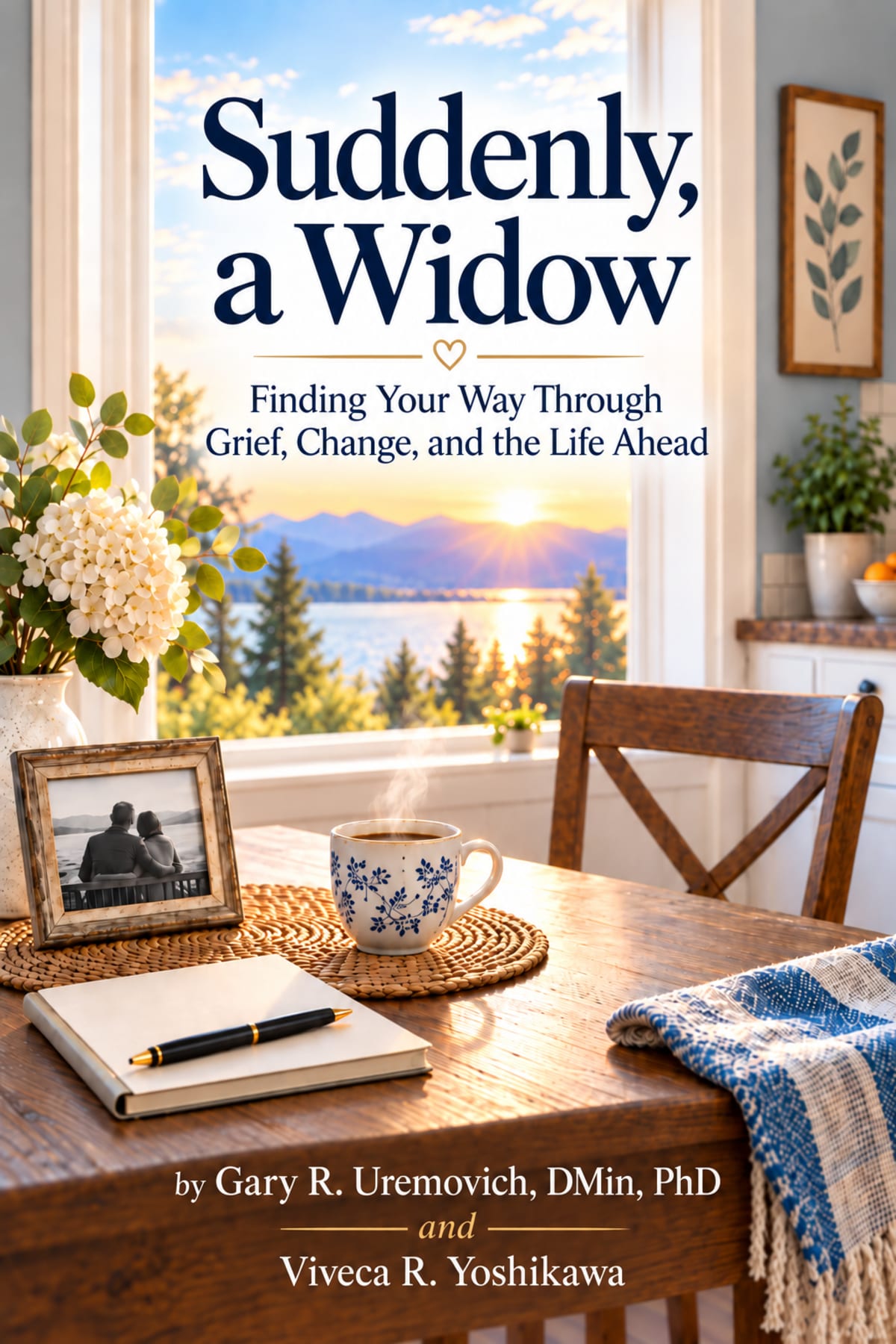
Viveca and I have spent many hours listening to women talk about life after the death of a husband. The conversations often begin with what happened—the illness, the final days, the telephone call, or the morning when everything changed. As the conversation continues, we hear about what follows. The house is quiet. Decisions remain, unfamiliar responsibilities take hold, and evenings stretch longer than they once did. Even the ordinary routines of a day can feel different when the person who shared them is gone.
As we have listened, we have been amazed by the resilience and courage of so many of these women. They do not always see themselves that way. A woman may tell us about handling a problem with the house, driving somewhere alone for the first time, or finally making a telephone call she had been putting off. To her, it may simply be something that needed doing. But as we hear what it took to face that moment while grieving, we recognize the courage involved. Over time, these conversations helped shape Suddenly, a Widow: Finding Your Way Through Grief, Change, and the Life Ahead. The book is a testament to these women and to the lives they are gradually learning to inhabit after loss.Listening for
What Matters
My years in healthcare, counseling, pastoral care, and grief support have taught me that people need time to tell you what is actually troubling them. The first question they ask may open the door to a concern they struggle to put into words. A conversation about selling the house may carry the fear of leaving the place where a marriage unfolded. Sorting through clothes may bring up questions about memory, loyalty, and whether putting something away means letting someone go. Even accepting a dinner invitation can feel complicated when a woman is uncertain about her place among friends who are still couples.
Viveca and I have tried to make room for those concerns to emerge. We ask questions, listen, and resist the temptation to make a difficult situation sound simpler than it is. Sometimes a practical suggestion helps. At other times, the most useful thing we can do is sit with someone while she says something she has been holding inside. We can learn a great deal when we let a conversation find its own pace.
We both bring personal experience to this work. I know what it means to lose a spouse after a long marriage, and Viveca understands widowhood from the inside. We know the feeling of discovering that familiar routines have become unfamiliar and that even a small decision can remind you of the person who is missing. Those experiences help us listen, but they also remind us to be careful not to assume we understand another person’s grief. Every marriage has its own history, and every woman is finding her way through a loss that belongs to her.
Recognizing Courage in Everyday Life
What has stayed with me most is how often courage appears in the details of an ordinary day. A woman takes responsibility for something her husband always handled. She makes a decision without being able to turn to him and ask what he thinks. She tells her family what she wants, accepts help when she needs it, or explains that she is not ready to do what others believe would be best. Each of these moments asks something of her that may be invisible to the people around her.
Listening to these women has deepened our understanding of resilience. We have come to appreciate how much competence and vulnerability can exist in the same person at the same time. A woman may manage a difficult appointment in the morning and be brought to tears by a familiar song that afternoon. She may feel pleased about something she has accomplished and still wish, with all her heart, that her husband were there to share it. Her ability to carry on does not tell us how little she hurts. Sometimes it tells us how much effort an ordinary day requires.
I am also mindful that admiring someone’s strength can place an unintended burden on her. If everyone keeps telling a widow how well she is doing, she may wonder whether there is still room to admit that she is lonely, frightened, or exhausted. Viveca and I wanted our book to make room for those admissions. A woman should be able to open its pages on a terrible day and feel that she has arrived somewhere she can be honest.
Bringing Those Conversations into the Book
When we began shaping Suddenly, a Widow, we kept returning to the image of sitting together at the kitchen table. That is where many of life’s difficult conversations happen, with a cup of coffee nearby and the day’s worries gradually finding their way into words. We wanted the book to have that same feeling: warm, direct, practical, and comfortable enough to allow for both tears and occasional humor. We hoped a reader would feel someone sitting beside her, helping her think through what needed attention.
The book begins with the first few days, when grief arrives alongside telephone calls, arrangements, questions, and decisions. It then follows the reader into the quieter period after everyone goes home, when the practical demands continue, and the absence becomes part of daily life. We discuss paperwork, financial questions, legal matters, caring for a home, and sorting through belongings. These responsibilities can feel overwhelming when a woman is already tired and grieving, so we gently help her discover what needs attention now and what can reasonably wait.
We also explore the emotional and social changes that can be harder to explain. Grief affects concentration, sleep, energy, relationships, and the way a person understands herself. Family members may have different expectations. Friendships may change. Faith may offer comfort while also raising difficult questions. Holidays, anniversaries, and ordinary familiar dates can carry unexpected weight. Throughout these chapters, we leave room for the fact that marriages differ, feelings can be complicated, and no timetable will fit every woman.
As the book continues, it considers the questions that may emerge when a woman begins to look further ahead. Does she want to remain in her home? What would she like her days to include? Is she interested in companionship? Where might she find purpose, connection, or enjoyment? A Survivor Journal accompanies these discussions, offering space to organize practical concerns and reflect on personal changes. Writing things down can help when there is too much to keep in mind, and it can also make gradual progress easier to recognize.
Discovering the Courage to Live Vibrantly
The phrase “living vibrantly” can feel distant to someone who is struggling to get through an evening alone. In the early days of grief, thinking about the future may be more than a person can manage. We respect that. In our conversations, we have learned to notice the smaller signs that interest in life is beginning to return: a woman mentions somewhere she would like to go, something she wants to learn, or a person she would enjoy seeing again. She begins to express a preference about the days ahead.
Those moments matter because they often arrive alongside grief. A woman may look forward to an outing and still feel the ache of coming home without her husband. She may enjoy herself and then feel unsettled by the realization that she has had a good day. Allowing pleasure back into life can take courage, particularly when it raises questions about loyalty to the person who died. We wanted to speak gently and honestly about that experience, giving readers room to discover that love, sorrow, and enjoyment can all remain part of her life.
Vibrant living will take a different shape for each woman. For one, it may involve travel, further education, or a new relationship. For another, it may grow through gardening, volunteering, friendship, faith, or more time with family. The important discovery is personal: she begins to notice that she still has interests, choices, and something to contribute. She may find herself looking forward to tomorrow, even as she misses the life she expected to have.
Viveca and I understand some of these questions through our own life together. We came to our marriage after both of us had experienced the death of a spouse. The people we loved, and the lives we shared with them remain part of who we are. Our marriage has helped us understand that opening ourselves to a new chapter does not remove the meaning of an earlier one. That understanding runs throughout the book, expressed in a thought we return to often: continuing to live does not mean leaving love behind.
With Gratitude to the Women Who Have Taught Us
The women who have shared their stories with us have helped us see more clearly what life after loss asks of a person. We have heard about loneliness, uncertainty, and decisions that felt almost impossible to make. We have also heard humor return to a conversation, curiosity emerge, and a growing confidence in a woman’s own judgment. Sometimes she recognizes those changes herself. Sometimes they become visible only when she looks back and realizes how much she has learned.
Suddenly, a Widow grew from our desire to offer companionship and useful guidance through that experience. It reflects our personal and professional lives, but it also carries our deep respect for the women whose stories have expanded our understanding. We are grateful for their trust, their honesty, and the courage they have allowed us to witness.
If you are living through this season, we hope you will find room in these pages for your own experience.
If you are a widow, you do not have to know what the rest of your life will look like before taking care of what is in front of you today. Over time, you may want to try new things, meet new people, and find moments you enjoy. We hope this book can accompany you as you find your way toward them, with love and the memory of loving and being loved still a big part of your life.