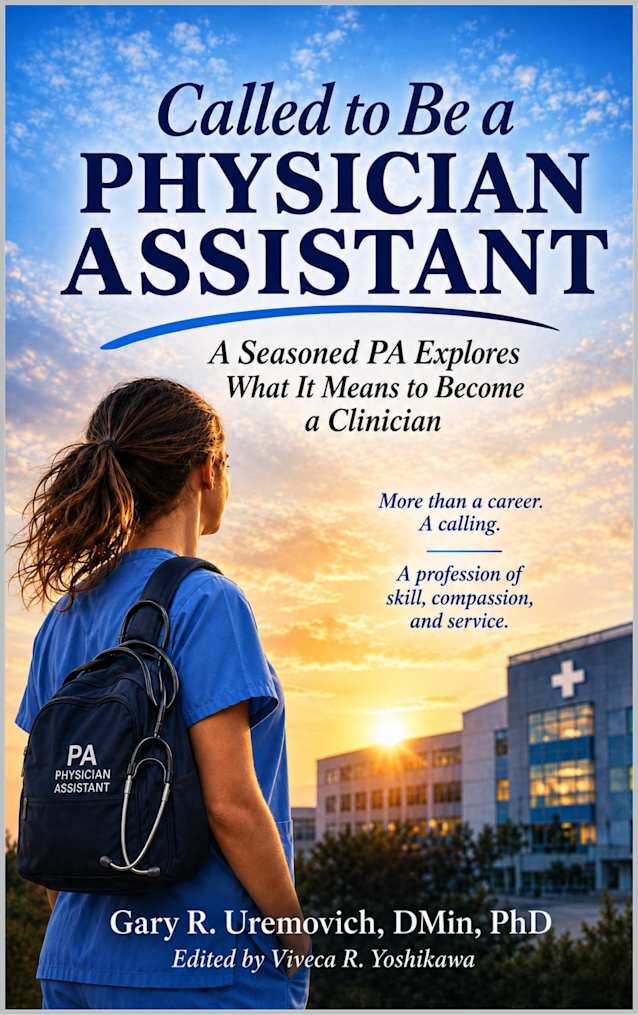
Called to be a Physician Assistant (PA): A Seasoned PA Explores what it means to become a Clinician.
About
What does it really mean to become a Physician Assistant?
Getting into PA school is only the beginning. You need to know what you are getting into first.
Called to Be a Physician Assistant (PA): A Seasoned PA Explores What It Means to Become a Clinician looks beyond prerequisites, applications, interviews, and acceptance letters to examine the life that waits on the other side.
Drawing on more than four decades of clinical practice, military medicine, specialty training, teaching, residency leadership, and PA program development, Gary R. Uremovich offers prospective students a candid guide to the profession. His purpose is not simply to encourage more people to become PAs, but to help the right people decide whether this demanding and rewarding work truly fits who they are—and who they are willing to become.
The book begins with the question behind every application: Why do you want to become a PA? From there, it explores six dimensions: Calling, Challenges, Curriculum, Career, Cost, and Clarity. Readers examine their motives, learn what PAs actually do, and consider whether their abilities, temperament, values, and expectations fit the responsibilities of medicine.
The journey continues into PA education: the intensity of the curriculum, the “fire hose” of information, clinical reasoning, metacognition, rotations, uncertainty, criticism, and the realization that previous study habits may no longer be enough. The goal is not merely to memorize medicine, but to learn how to think like a clinician—to listen, observe, prioritize, recognize danger, tolerate uncertainty, seek consultation, and make responsible decisions.
The book also addresses professional identity, teamwork, mentorship, difficult patients, mistakes, emotional responsibility, career development, humility, and lifelong learning.
Equally important are the costs that can be overlooked during the excitement of applying: tuition and debt, lost income, family strain, social sacrifice, emotional fatigue, and spiritual questions that may arise when caring for people who are frightened, suffering, or dying. PA school does not affect only the student; spouses, partners, children, parents, friendships, finances, and routines may all become part of the journey.
Yet medicine also offers unusual gifts: intellectual challenge, meaningful service, professional growth, trusted relationships with patients, developing clinical judgment, and the privilege of being useful during some of the most vulnerable moments of another person’s life.
A distinctive feature of the book is the “Before You Apply” section at the end of every chapter. Each one creates a deliberate pause for reflection and conversation.
Reality Check brings the chapter back to the practical realities of PA education and practice.
Ask Yourself explores motivation, readiness, expectations, relationships, finances, values, strengths, and limitations.
Ask a PA encourages readers to speak with practicing PAs and learn from those who have already traveled the road they are considering.
The Cost and the Gift asks readers to consider both what becoming a PA may require and what the profession may offer in return.
These sections are not quizzes. They are designed to help prospective students reflect, talk with experienced clinicians, and make a more informed decision before investing years of their lives in a demanding profession.
Called to Be a Physician Assistant is for the student who wants more than advice about getting accepted. It asks a more important question:
Do I simply want to become a PA, or am I prepared to become the kind of clinician a patient can trust?