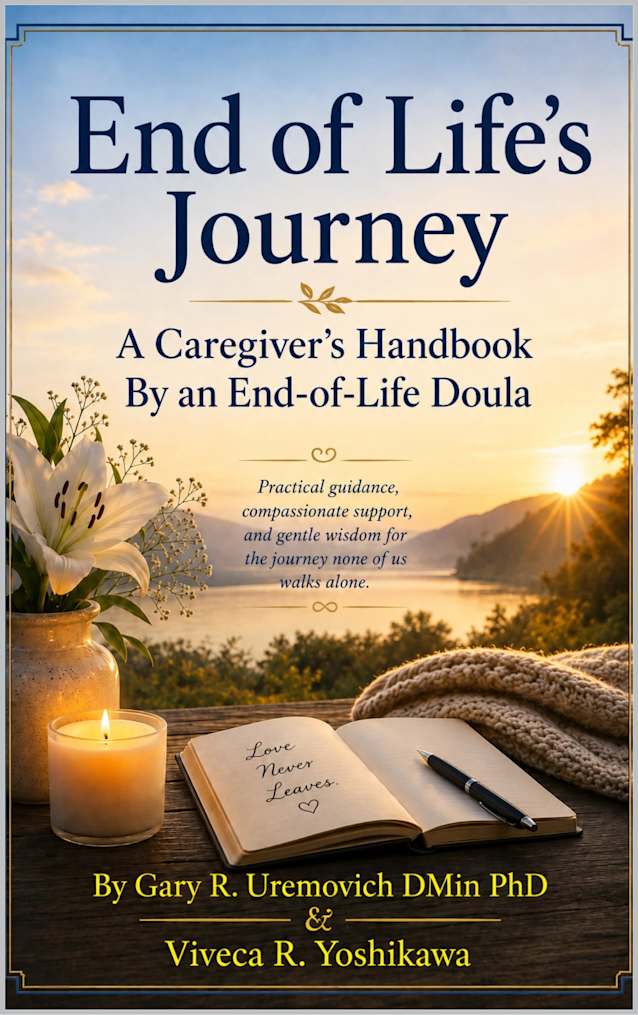
End of Life’s Journey: A Caregiver’s Handbook By an End-of-Life Doula
About
End-of-Life’s Journey: A Caregiver’s Handbook by an End-of-Life Doula is a compassionate, practical, and deeply human guide for families, caregivers, faith communities, and anyone standing near the bedside of someone they love and wondering, “What am I supposed to do now?”
Death is one of the few realities every person will eventually face, yet it remains one of the conversations families most often avoid until crisis has already arrived. This handbook helps readers begin those conversations earlier, prepare more wisely, and walk the end-of-life journey with greater dignity, honesty, comfort, and love.
This book brings together medical understanding, pastoral care, caregiving experience, spiritual reflection, and practical end-of-life guidance. It does not promise a perfect death. Families are complicated. Illness is unpredictable. Caregivers become exhausted. People say the wrong things. Old wounds can appear at the worst possible time. Yet even when death is not perfect, it can still be compassionate, faithful, dignified, and surrounded by love.
This book speaks to real caregivers, not imaginary ones with unlimited patience, endless sleep, and perfectly cooperative relatives. It addresses reluctant caregivers, unwilling care receivers, exhausted spouses, adult children carrying guilt, absent siblings, controlling relatives, and the hidden burden often placed on women as default caregivers. With warmth and gentle humor, it reminds caregivers that they do not have to become heroes. They need support, rest, guidance, and permission to be human.
A central focus of this edition is the role of the death doula. A death doula does not replace physicians, nurses, hospice teams, chaplains, social workers, counselors, funeral directors, or family caregivers. Instead, the doula helps hold the human space around dying. The doula listens deeply, helps families ask difficult questions, supports planning, assists with vigil preparation, encourages legacy work, honors the dying person’s wishes, and reminds everyone that death is not only a clinical event. It is a sacred human passage.
The final chapters offer calm, reverent guidance for the last days and hours. Families will learn about common signs that death may be near, including less eating and drinking, increased sleep, withdrawal, breathing changes, cool hands and feet, restlessness, confusion, possible visions or unusual language, and the final rally or surge. The chapter on the moment of death gently explains what may happen physically, who to call, how to pause before rushing into paperwork, how to allow family members time, and how to honor prayer, blessing, silence, tears, hospice notification, funeral home contact, and cultural or faith traditions.
Legacy is also central to this book. Readers are invited to consider life review, ethical wills, letters to family, memory boxes, audio or video messages, blessing projects, family stories, recipe collections, prayer and hymn collections, and “What I want you to remember” letters. These practices help families remember the whole person, not merely the final illness.
Practical without being cold, spiritual without being preachy, honest without being hopeless, End-of-Life’s Journey is a companion for one of life’s most difficult and sacred seasons. It helps families speak sooner, listen longer, plan wisely, support caregivers, honor the dying, and preserve the love and legacy that remain.
When cure is no longer possible, love can still stay.
And by grace, love remains.