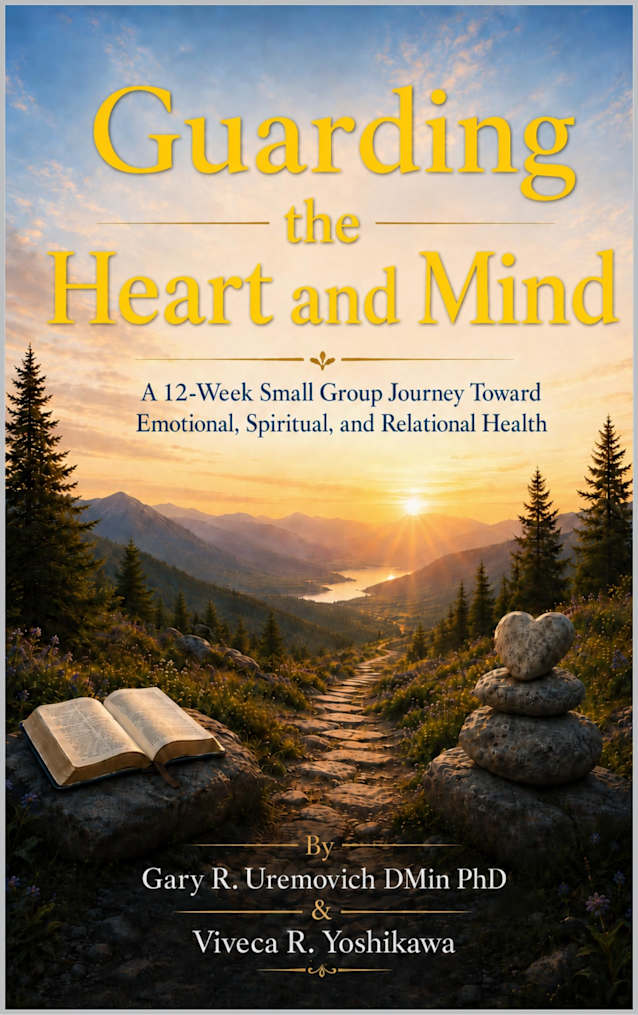
Guarding the Heart and Mind: A 12-Week Small Group Journey Toward Emotional, Spiritual, and Relational Health (Conversational Small Group Bible Studies)
About
Guarding the Heart and Mind: A 12-Week Small Group Journey Toward Emotional, Spiritual, and Relational Health is a thoughtful and compassionate Christian study designed for people who want to care more intentionally for their inner lives. Written by Gary R. Uremovich, DMin, PhD, and Viveca R. Yoshikawa, this book brings together biblical reflection, emotional awareness, practical wisdom, and the healing power of supportive community.
Many Christians have been taught to care for their spiritual lives, serve others faithfully, and keep going through difficulty, yet they may have received far less guidance on how to understand anxiety, grief, shame, anger, loneliness, emotional exhaustion, or relational pain. This study gently bridges that gap. It reminds readers that emotional struggles are not signs of spiritual failure. The Bible is filled with faithful people who wrestled with fear, sorrow, discouragement, guilt, exhaustion, and loss. Even Jesus experienced grief, anguish, loneliness, compassion fatigue, and deep emotional distress.
Rather than offering clichés or easy answers, Guarding the Heart and Mind invites participants into a grace-centered process of honest reflection and gradual growth. Each session helps group members explore a vital area of emotional and spiritual life, including stress and anxiety, shame and guilt, emotional honesty, depression and discouragement, anger and resentment, grief and loss, forgiveness and boundaries, loneliness and belonging, identity and purpose, compassion, service, renewal, and hope.
The structure of the book makes it especially useful for churches, small groups, support ministries, adult education classes, and faith-based discussion groups. Each session includes an opening prayer, opening conversation, Scripture reflection, narrative teaching, small group discussion questions, a weekly practice, space for takeaways, and a closing prayer. This rhythm allows participants to move beyond information alone and into reflection, conversation, and lived practice.
The study also places strong emphasis on emotional safety. It encourages confidentiality, respect, active listening, voluntary sharing, healthy boundaries, humility, and compassion. Participants are reminded not to fix, diagnose, pressure, shame, or overwhelm one another. Instead, the group becomes a place where people can listen deeply, speak honestly, and grow at their own pace.
At the same time, the book is clear that it is not a therapy manual and does not replace professional counseling, medical care, psychiatric treatment, or crisis intervention. It recognizes that some emotional and mental health concerns require trained professional support. This balanced approach makes the study both spiritually meaningful and responsible.
At its heart, Guarding the Heart and Mind is about wholeness. It invites readers to bring their whole selves before God: their joy and sorrow, confidence and fear, wounds and hopes, strength and weakness. It teaches that healing often happens through grace, truth, self-awareness, prayer, wise practices, and loving community.
This is a book for people who are tired of pretending everything is fine. It is for people who want to understand what they carry inside. It is for churches that want to become safer, wiser, and more compassionate communities. It is for small groups that want to move beyond surface conversation into honest, grace-filled reflection.
Guarding the Heart and Mind offers a hopeful message: God meets people not only in their strengths but also in their weariness, wounds, questions, grief, and longing for renewal.