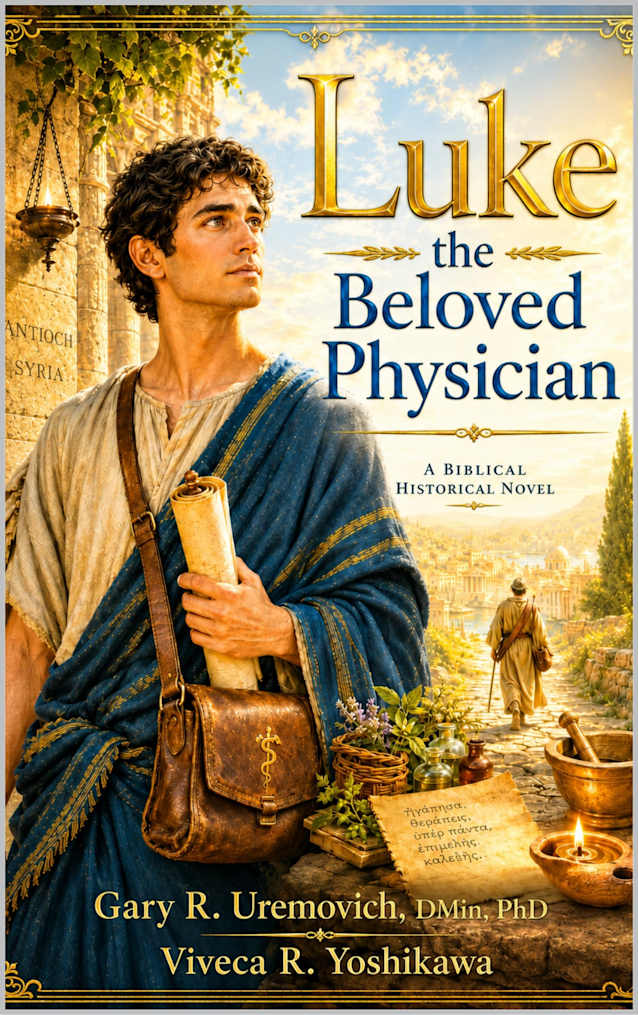
Luke, The Beloved Physician: A Novel of Healing, Faith, and Grace
About
Luke is one of the most influential and mysterious figures in the New Testament. Traditionally understood as the author of the Gospel of Luke and the Acts of the Apostles, he gave the church Mary’s song, the shepherds in the fields, the Good Samaritan, the Prodigal Son, Zacchaeus, the road to Emmaus, Pentecost, Paul’s journeys, and the Gospel’s movement from Jerusalem toward Rome. Yet for all that Luke wrote, we know remarkably little about him.
Luke, the Beloved Physician: A Novel of Healing, Faith, and Grace enters that mystery with reverent imagination.
Who was Luke before he became Paul’s traveling companion? How did a Gentile physician become drawn to the God of Israel? What kind of suffering first opened his heart to healing? What did it mean for a man trained to observe bodies, fevers, wounds, and death to hear of Jesus—the healer who touched lepers, restored sight, forgave sinners, and welcomed outsiders?
This biblical historical novel imagines Luke as a young Gentile born into privilege in Antioch, surrounded by Roman order, household gods, temples, and rituals that appear respectable but spiritually empty. From childhood, Luke notices what others ignore: the sick servant gasping for breath, the fevered child on the temple steps, the poor left unseen, and the helplessness of adults when suffering enters the room. Drawn to medicine, he learns that healing is not merely the treatment of a body. It is the recognition of a person.
Under the wise and blunt physician Diodoros, Luke learns to listen before speaking, observe before judging, and do what mercy permits even when cure is beyond reach. At the same time, his spiritual hunger deepens. The gods of Rome cannot answer his questions. Then he hears of the God of Israel—the God without an image, the Maker of heaven and earth, the One said to be near to the brokenhearted.
Then come the rumors of Jesus: a teacher from Nazareth, a healer in Galilee, a man who touches the unclean, welcomes women, eats with sinners, forgives sins, and speaks of the kingdom of God. Luke does not believe easily. He is trained to question, compare, and test. Yet the stories refuse to leave him.
When Paul arrives, Luke’s search becomes personal. Paul is brilliant, scarred, intense, and seized by the risen Christ. He proclaims that Jesus is the crucified and risen Messiah—and that through Him, Gentiles are welcomed into the promises of Israel’s God. Grace has crossed the threshold toward Luke.
But Paul is also afflicted. He has prayed for healing, yet the Lord has answered, “My grace is sufficient.” Luke sees miracles in Jesus’ name, but he also sees Paul continue in weakness. The apostle who proclaims resurrection still needs a physician. The missionary to the Gentiles needs someone who understands wounds, exhaustion, travel, and the fragile body that carries the Gospel.
Luke, the Beloved Physician follows Luke’s imagined journey from spiritual seeker to disciple, from medical apprentice to servant of Christ, from careful observer to faithful witness. Medicine and miracle meet—not as enemies, but as different expressions of mercy under the lordship of Jesus. Prayer does not make medical care unnecessary. Medicine does not make prayer small. Both belong to the God who created the body and promises resurrection.
Rich with biblical imagination and compassionate storytelling, this novel explores faith, suffering, healing, grace, and the calling of a man who would one day write so that every lover of God—every Theophilus—might know the certainty of the good news.
Luke listened. Luke healed. Luke traveled. Luke wrote. And because he did, the church still hears the story of Jesus with greater clarity.