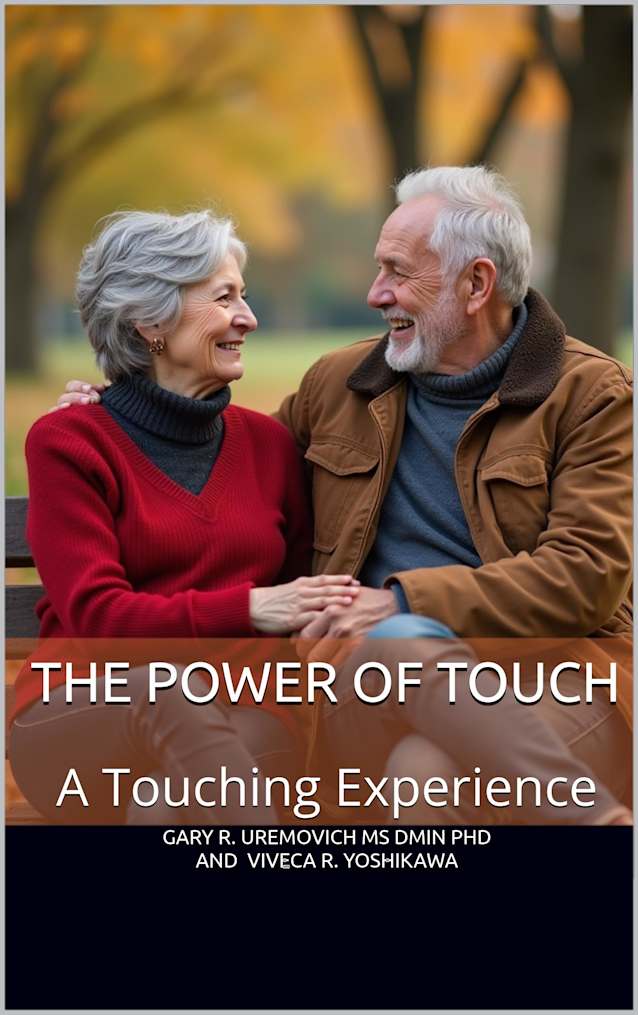
The Power of Touch: A Touching Experience
About
In The Power of Touch: A Touching Experience, Dr. Gary R. Uremovich and Viveca R. Yoshikawa bring to light one of the most silent and overlooked public health crises of our time: touch deprivation, or what researchers now call “skin hunger.” This is not a metaphor. It’s a measurable, biological, emotional, and spiritual ache that millions—especially older adults—live with every single day.
“We are not just lonely for company. We are starving for contact.”
Drawing from Gary’s decades of clinical and academic experience as a physician assistant, professor, and military officer, and Viveca’s lifetime of relational wisdom as a writer, editor, and mother, this book offers both scientific insight and soulful storytelling. The authors blend research with lived experience, theology with neuroscience, and gentle encouragement with practical steps.
The book introduces a simple, courageous concept: A Touching Experience. It’s a way for two people—friends, widows, partners, or companions—to share physical closeness in ways that are comforting, safe, and mutually agreed upon.Together, they pose a revolutionary idea: what if intimacy didn’t have to mean sex, but could mean consensual touch?
“This isn’t about seduction. It’s about connection. Honest. Mutual. Healing.”
“We don’t grow out of the need to be touched.
We grow into a deeper awareness of what it means.”
The book is structured around three types of touch, each deeply human and distinctly healing:
Nurturing Touch: Think of a warm embrace, hand-holding, sitting close during a conversation. Comforting and stabilizing.
Sensual Touch: Slow, deliberate, and attuned to sensation—but not sexual. This is about presence, not arousal.
Non-Sexual Erotic Touch: For those in deep trust, this kind of touch includes intentional closeness and affection that may stir desire, but remains grounded in non-sexual connection, consent, clarity, and safety.
Each section includes real-life vignettes, scientific studies, reflection questions, and examples of how people in their 60s, 70s, 80s, and even 90s are reimagining what closeness can look like without the pressure of performance or misunderstanding.
“Touch is not a privilege to be earned by youth, beauty, or romance.
It is a human right.
You are not too old to want it.
You are not broken for needing it.
You are not alone.”
What makes this book powerful is not only its information, but its compassion. It speaks to widows who have gone years without a hug. To divorced men who miss the warmth of another’s hand. To caregivers who offer so much touch to others, but rarely receive it in return. To couples who have lost the erotic spark, and long to rediscover not youth, but intimacy.
“A back rub, a shared gaze, a gentle embrace—these are not luxuries. They are lifelines.”
The Power of Touch does not shy away from science. It discusses how oxytocin is released through soft contact, how cortisol drops, and how immune systems improve. It unpacks the role of the parasympathetic nervous system, the function of C-tactile fibers, and how healing begins at the skin. But it always comes back to something deeper:
“Touch is the body’s way of saying: ‘You matter.’”
This book is not a manual—it is an invitation. To reclaim dignity. To rediscover presence. To make space for affection in a world that often forgets its necessity. Whether you are reading this alone or with someone you trust, the message is clear:
“You don’t need to be young to feel desired.
You don’t need to be in a relationship to be touched.
You only need to be human.”
Let this book remind you that touch is not a memory of what was, but a possibility of what can still be. Right here. Right now. One hand. One hug. One healing encounter at a time.